
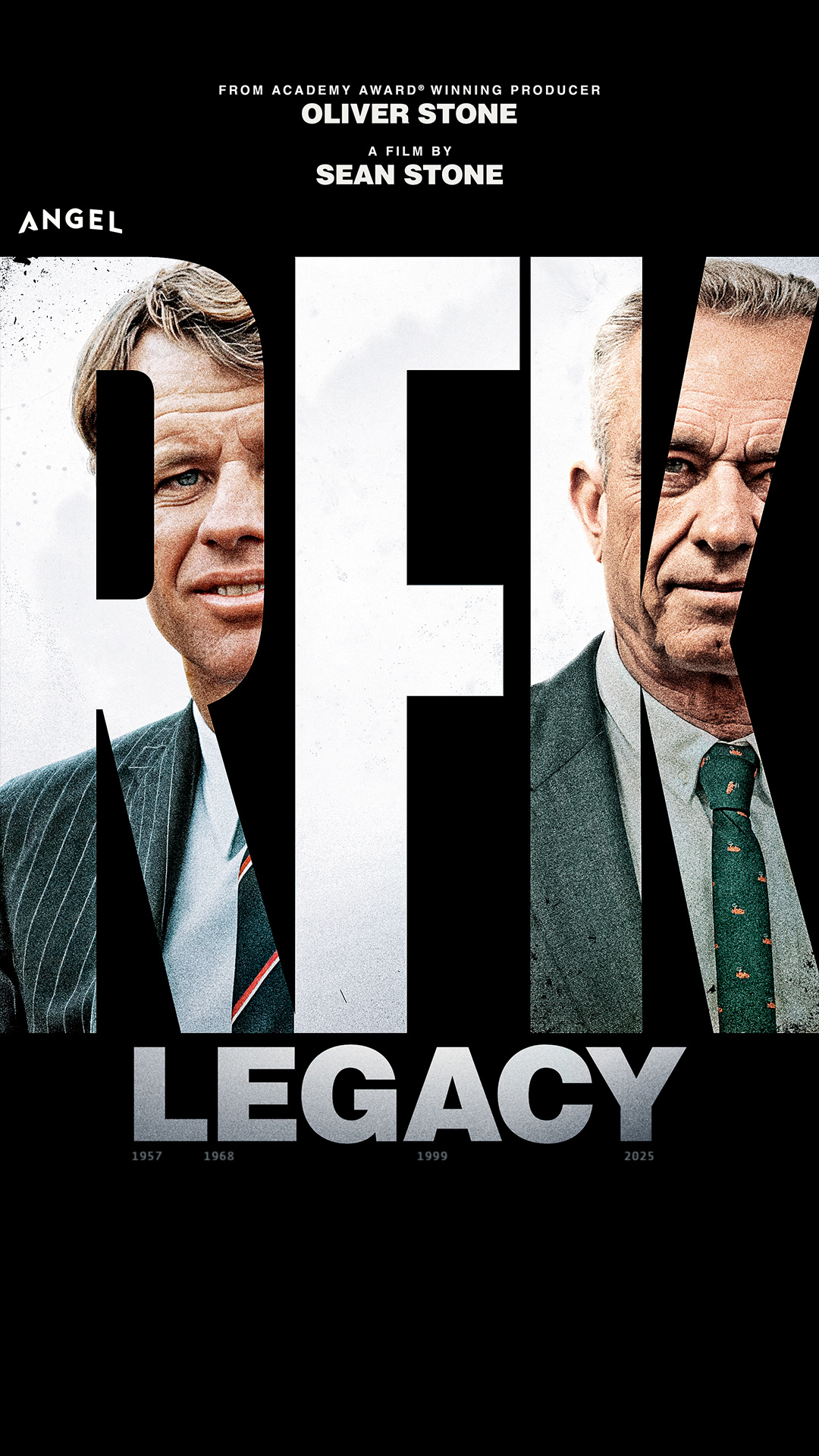
‘RFK: Legacy’ is a deep-dive into the history of America and the lives and work of RFK and RFK Jr.

The new film from Angel Studios, RFK: Legacy, looks at the history of the United States from the 1960s to today through the lives and legacies of Robert F. Kennedy and Robert F. Kennedy Jr. These two men, father and son, have had an enormous impact on the country, each in their own ways.

Filmmaker Oliver Stone and his son Sean set out to show how the two men elevated themselves and how each of them set out to improve the lives of others. While RFK never made it to the White House himself, his legacy has woven itself through the history of the last half of the 20th century. And the trajectory of RFK Jr. has also impacted the lives of people in this country and around the world with his investigative efforts and subsequent lawsuits.

RFK went to Harvard and then on to the University of Virginia Law School. RFK Jr. went to Harvard and then on to the University of Virginia Law School. It looked as though the son was about to follow in his father’s footsteps, however there were other forces pulling at RFK Jr. that initially led him away from politics and to the environmental field where he used his talents (and sensitivity) to clean up the rivers, take large companies to court for their carcinogenic ingredients, and eliminate mercury from vaccinations.
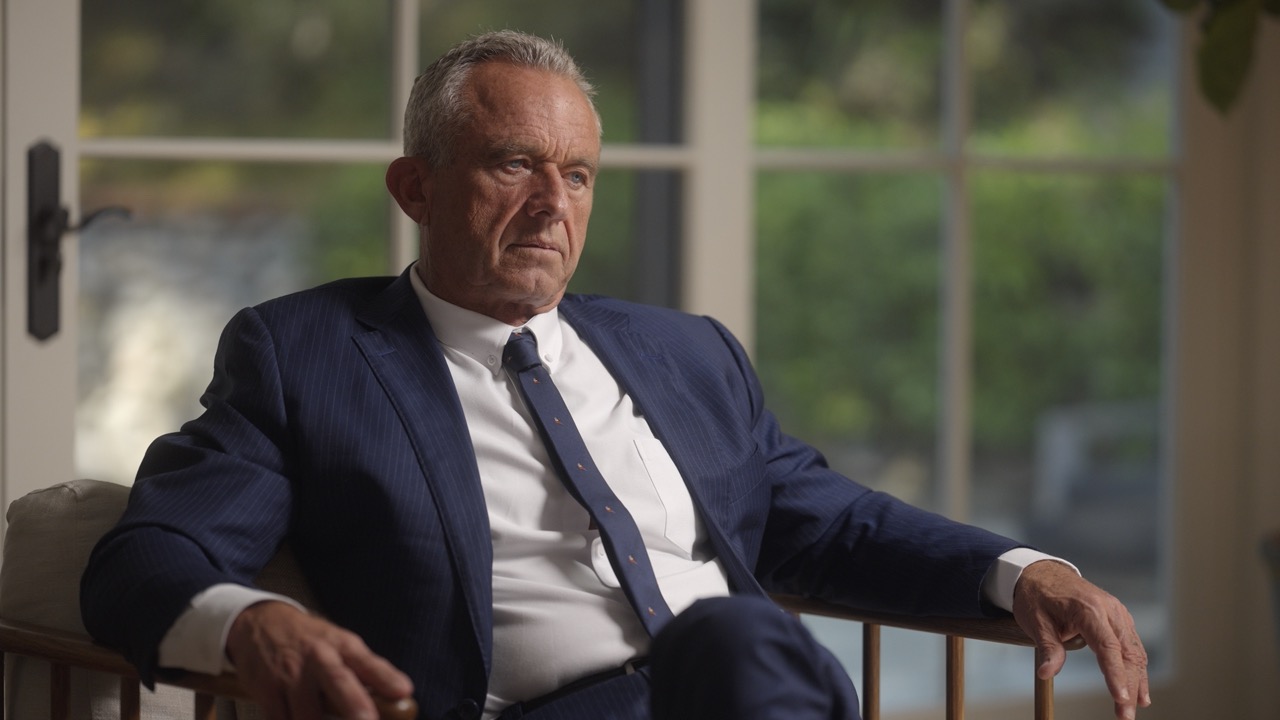
The life and career of RFK Jr. is told primarily through his interview with Oliver Stone. They also delve deeply into the assassination of his father in 1968, and Bobby as well as comments from those who also investigated the event. The conclusion might be shocking to many viewers, however it makes more sense than the official findings.

And the assassination of President Kennedy takes on a new perspective with the comments by Bobby who explains what his father knew about the events in Dallas and what he wanted to do about it. These facts might be eye-opening for those who believe in the lone gun theory, however with the recent release of files, they are more compelling and truthful.
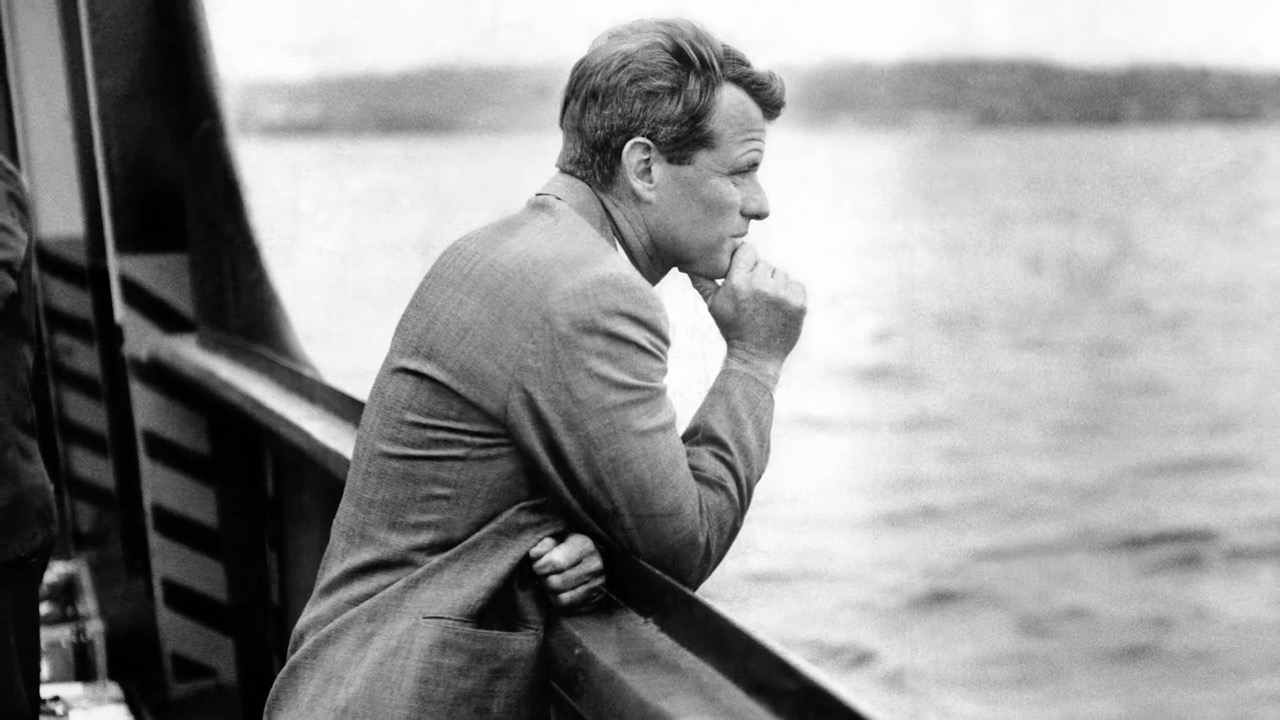
Looking back at the career of RFK and how the country was in turmoil during his final years, is a history lesson that delves into specific events and situations. The country was deeply divided and RFK, as well as many others, felt he was the only person who could bring it together and make it whole again. But that was not to be.

As his father wanted to unite the country, so did RFK Jr. who took up the mantle, or the torch, but his voice was silenced by the left. Knowing he had much to give to the country, he joined the Trump team and is now the Secretary of Health and Human Services. His mission is “To Make America Healthy Again.” The MAHA movement is getting criticism by the left but that does not dissuade him from continuing to make life better for Americans. As he said, the notion that he is “anti-vax” is not true. He is for vaccinations as long as they have been thoroughly tested and deemed safe, and wants to make that clear.

Bobby Jr. does not shy away from discussing his past drug addiction, and explains how he became addicted and finally sober. His candid interview is refreshing and explains a lot about the man.

So, by combining the lives and careers of both Robert F. Kennedy and Robert F. Kennedy Jr. in this one documentary, complete with films and photos, comments and insight from friends and historians, and the memories and statements from RFK Jr., this film is basically a lesson in the history of the country for the last 60 years as well as the careers and devotion to the country of the two men. 

The pursuit of justice and accountability was front and center for Robert Kennedy and is the same for his son. They both faced criticism and were maligned for their views and actions, yet both men put others before themselves.

With the elevation of RFK Jr. on the world stage, the life, career, and assassination of RFK has also been brought to the forefront. Facts, memories, thoughts, and insight combine to bring a well-rounded look at the two men.

Directed by Sean Stone, RFK: Legacy is an important film for today’s audiences. It is mesmerizing, educational, insightful, and captivating.

The film is now streaming on Angel.

Images courtesy Angel Studios

About the Author

Francine Brokaw has been covering all aspects of the entertainment industry for over 30 years. She also writes about products and travel. She has been published in national and international newspapers and magazines as well as Internet websites. She has written her own book, Beyond the Red Carpet The World of Entertainment Journalists, and is the entertainment correspondent for Good Day Orange County. Francine is a longstanding member of the Television Critics Association and is accredited by the MPAA.
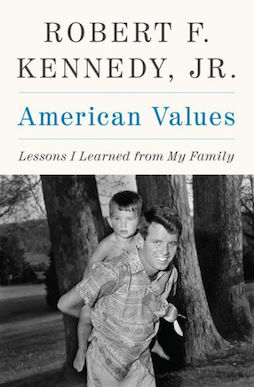


‘American Values: Lessons I Learned from My Family’ by Robert F. Kennedy, Jr. – Book Review


Robert F. Kennedy, Jr. has penned an interesting and insightful memoir about his life and times, and his family and how their legacies have shaped the country and the world. There are plenty of personal memories recounted throughout the pages, but the book is a memoir of how his relationships and how his family have played a role in the world and how they have shaped his own life. “American Values: Lessons I Learned from My Family” is filled with history and facts that are new to most readers.

Kennedy breaks the book down into sections, each focusing on a specific person or time in history. He begins with his grandfather, Joseph P. Kennedy, the patriarch of the family, and then turns his focus to his grandmother, Rose Kennedy. He discusses his grandparents and their contributions to the family. Kennedy emphasizes his grandmother’s insistence on punctuality, cleanliness, and good manners – especially at the dinner table.

RFK Jr. is not only a Kennedy, but he is also part Skakel. His mother, Ethel Skakel Kennedy came from an influential and wealthy family. The Skakels were different from the Kennedys in that they did not have the regulations placed on them. They didn’t have a set dinnertime, and they were staunch republicans. So, when Ethel married into a democratic family, her family was surprised. She gradually took on the values of her husband. Theirs was a love that lasted through the decades, and even the five decades since his death.

Kennedy then tackles the subjects that we have come to expect from a Kennedy memoir: The White House years and the contributions of the president as well as his mistakes, growing up at his family’s farm known as Hickory Hill, his father’s tenure as Attorney General, and his father’s years as senator. The author had a front row seat to all of these and although he was young, he has a remarkable memory and adds his own reflections about these times.

Unlike most personal Kennedy memoirs, RFK Jr. tackles the subjects of both assassinations and describes what he and his family did during those horrific days. He explains how he found out his father had been shot and what he did – along with his siblings – on the subsequent days. It’s heartening to read his personal accounts of the tragedies that affected the country but even more so the family. While we think of the assassinations as American tragedies – which they were – we also have to remember the victims were also members of a large and loving family.

The author finishes with reflections about his mother and their turbulent relationship through the years. RFK Jr. was often in trouble with the law and confesses to being an alcoholic and drug user. He also confesses to the many times he and his mother clashed. But in the end, they have come to terms with their past and, according to the book, have a good relationship today.

There is no doubt the world would be a different place if either John or Robert had not been killed. As the author explains, President Kennedy had planned on removing all American forces from Vietnam as soon as possible after his reelection. He also wanted to normalize the relationship with Cuba, making the tiny island nation a friend and not a foe.

There are also several interesting facts brought out about the CIA and the assassinations. The author has had personal conversations with many influential people all around the world and weaves them into the pages as he paints a portrait of his life and times, in a very interesting and compelling way.

Hardcover: 448 pages
Publisher: Harper
ISBN-10: 0060848340
ISBN-13: 978-0060848347

About the Reviewer

Francine Brokaw writes about books, products, travel, and entertainment. She has been published in national and international newspapers and magazines as well as Internet websites. She has written her own book, Beyond the Red Carpet The World of Entertainment Journalists, from Sourced Media Books.

Follow her on Twitter

‘RFK: The Kennedy Family Remembers’ on History Channel


To honor the life of their father on the 50th anniversary of his assassination, Kathleen, Kerry, and Robert Kennedy, Jr. talk about their dad and his life and times. In RFK: The Kennedy Family Remembers, viewers get an inside look at the man who affected so many people, especially during the last year of his life.

Besides the three (of eleven) children of Robert and Ethel Kennedy, Kennedy insiders and historians also weigh in and discuss the evolution of RFK from the time he was Attorney General under the Kennedy Administration to his death. His fight for economic and racial justice, his depth of compassion, and his commitment to this country is front and center.

This film shows the evolution of the man. He had a great capacity for change, and that is exactly what he did and why he was beloved.

Looking briefly at the Cuban Missile Crisis, Apartheid in South Africa, Poverty in the American South, and the War in Vietnam, the film provides a good sketch of RFK during these critical times. It’s not an intricate documentary, yet it is a good representation of the ideals and the history that led RFK through the 1960s. He forged his own way after coming out of the shadow of his brother, and he was a beacon of hope for the country in a troubled time.

For those of us who were alive, it’s difficult to believe it has been 50 years since his death. In many ways it feels like just yesterday but when we look at the things that have happened since 1968, it seems like centuries ago. The death of Robert Kennedy was perhaps the most pivotal point in recent American history, even more so than the assassination of President Kennedy. With the death of RFK, the country turned a sharp corner and many people, including Robert Kennedy, Jr., say we are where we are today because of the assassination.

I have often been asked if I thought the world would be completely different had RFK not been assassinated. My answer is always, “Yes.” Even if he had not been elected president, he would have been a major factor. And had he become the president, the entire world would definitely be a different place in which to live.

“To tame the savageness of man and make gentle the life of this world.” That is what we would have strived for. That is what he strived for.

RFK: The Kennedy Family Remembers premiers June 4, 2018 on History.

About the Author

Francine Brokaw has been covering all aspects of the entertainment industry for over 20 years. She also writes about products and travel. She has been published in national and international newspapers and magazines as well as Internet websites. She has written her own book, Beyond the Red Carpet The World of Entertainment Journalists, from Sourced Media Books.

Follow her on Twitter